
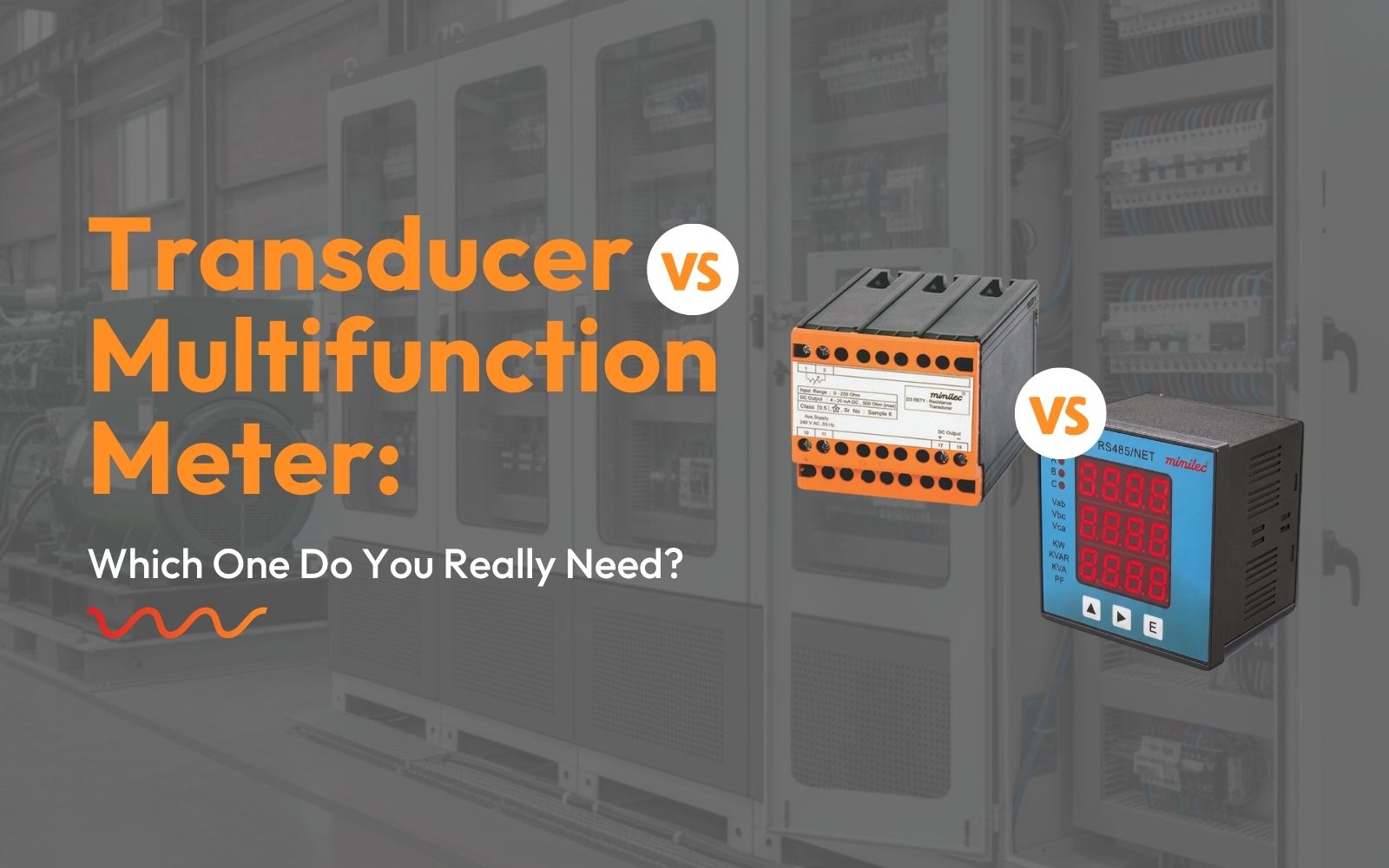
In modern industrial environments, accurate electrical monitoring is no longer optional, but it’s essential for efficiency, safety, and reliability.
Two commonly used devices for this purpose are:
- Transducers
- Multifunction Meters (MFM)
While both measure electrical parameters, they serve very different roles in an electrical system.
So the real question is: Which one do you actually need?
Let’s break it down in a simple, practical way.
Transducer
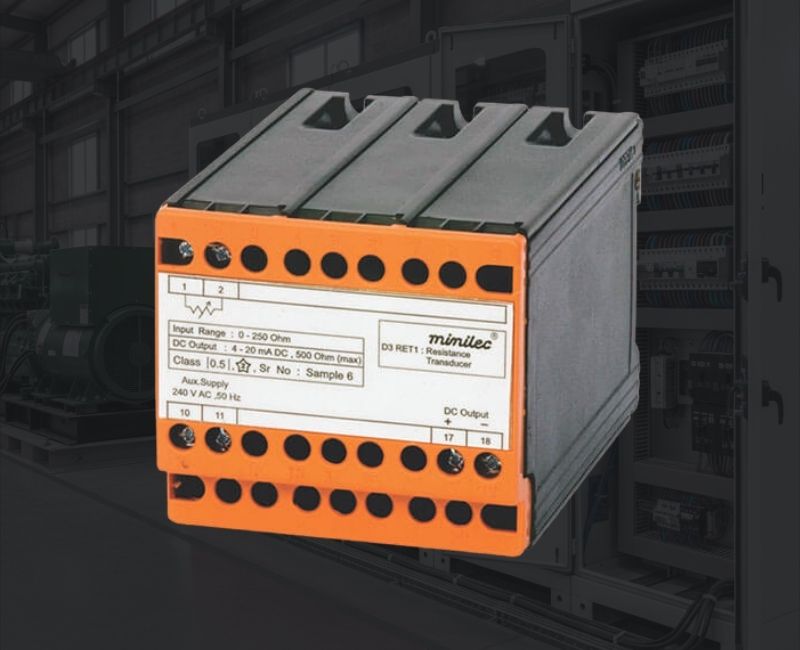
A transducer is a device that converts electrical
parameters like voltage, current, power, or frequency
into a standardized Analog output signal
(typically 4–20 mA or 0–10V).
Key Purpose: To transmit electrical data to control systems like PLCs, SCADA, or DCS
Its Commonly used for:
- Industrial automation systems
- Remote monitoring setups
- Data acquisition systems
Example:
If you want to send current data from a panel to a PLC located far away, a transducer is the ideal choice.
Multifunction Meter (MFM)
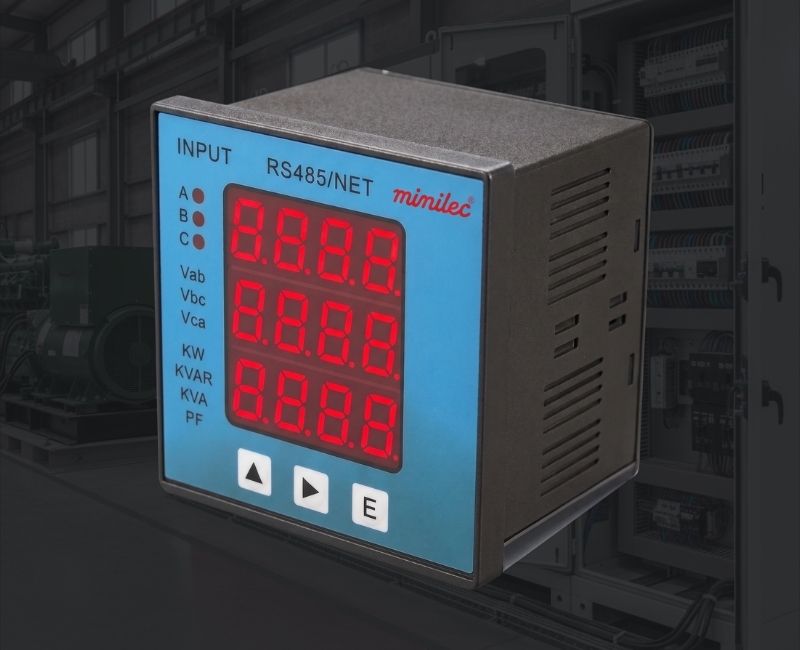
A multifunction meter is a digital device that
measures and displays multiple electrical
parameters such as:
- Voltage
- Current
- Power
- Power factor
- Frequency
- Energy consumption
Key Purpose: To monitor and display electrical parameters locally
Its Commonly Used for:
- Electrical panels
- Energy monitoring
- Maintenance and diagnostics
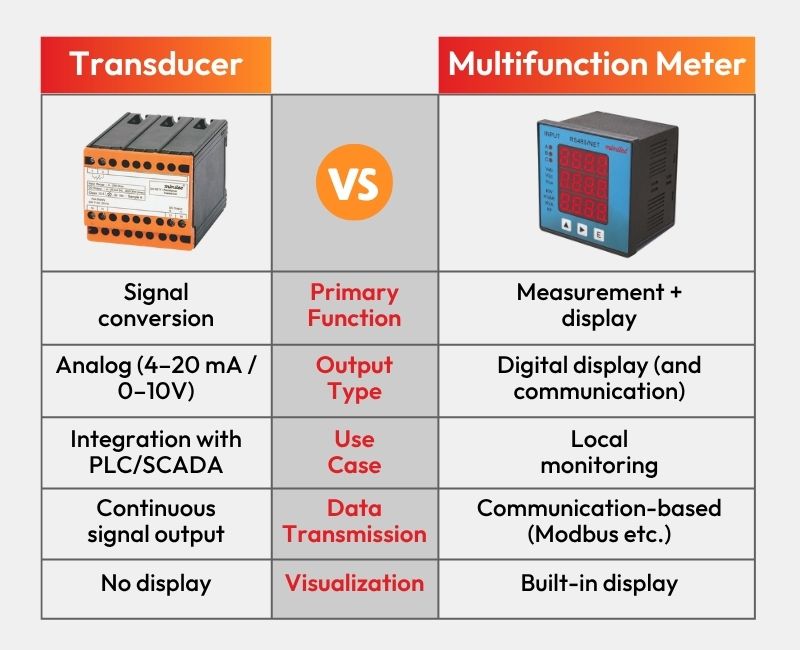
Transducer vs Multifunction Meter – Key Differentiators
When to Use a Transducer?
Choose a transducer when:
- You need to send data to PLC/SCADA
- Long-distance signal transmission is required
- You need stable analog signals
- Real-time automation control is involved
In short, Use a transducer when machines need to “communicate” to systems.
When to Use a Multifunction Meter?
Choose a multifunction meter when:
- You need to monitor parameters locally
- Operators require real-time display
- You want energy consumption insights
- Maintenance teams need quick diagnostics
In short, Use an MFM when humans need to “see” the data.
Can You Use Both Together?
Yes – and in many cases, you should.
In modern industrial systems:
- MFM – for local monitoring and visualization
- Transducer – for sending data to control systems
This combination ensures:
- Better visibility
- Better control
- Better decision-making
Common Mistake to Avoid
Many users assume that a multifunction meter can completely replace a transducer.
That’s not always true.
- MFMs rely on communication protocols
- Transducers provide continuous analog signals, which are often more reliable for control systems
Real-World Application Example
In an industrial plant:
- A transducer sends real-time current data to a PLC
- The PLC triggers protection logic if limits are exceeded
- A multifunction meter displays system parameter for operators
This ensures both automation and visibility
Conclusion
Choosing between a transducer and a multifunction meter is not about which is better, it’s about what your system needs.
- Use a transducer for control and signal transmission
- Use a multifunction meter for monitoring and analysis
- Use both for a complete, reliable system
In industrial environments, the difference between smooth operation and costly downtime often comes down to how well you monitor your system.
Choosing the right device is the first step toward that reliability.