

Every panel does not have the same alarm requirement.
Some panels have only a few critical alarms. Some need to display many fault signals. Some are built for small utility systems. Some are part of larger process or substation applications. Some may also need communication with higher-level monitoring systems.
But in every case, one thing remains important.
When something needs attention, the panel should indicate it clearly and in time.
This is where alarm annunciation becomes an important part of panel design.
One Alarm Setup Does Not Fit Every Panel
In many projects, the annunciator is selected after most of the panel design is already done.
The panel layout is ready. The fault list is almost final. Wiring space is planned. Then the question comes up.
How many alarm windows are needed? Which operating sequence should be used? Will the system need communication? Can more alarm points be added later?
If these questions are not considered early, the panel may become limited later.
Annunciation should match the panel requirement from the beginning, not adjust to it at the end.
Window Count Should Match the Application
A small panel may need only 4 or 8 alarm windows. A larger system may need 16, 24, 32 or even 48 windows.
Each window represents one signal that needs attention. It may be a fault, trip, warning or status indication.

Selecting the right window count is not only about today’s requirement. It is also about future expansion. If more signals are added later, the annunciator should support the application without major panel changes.
The right window count gives the panel room to grow.
Alarm Sequence Makes the Indication Useful
An alarm annunciator does more than display a signal.
It follows a sequence.
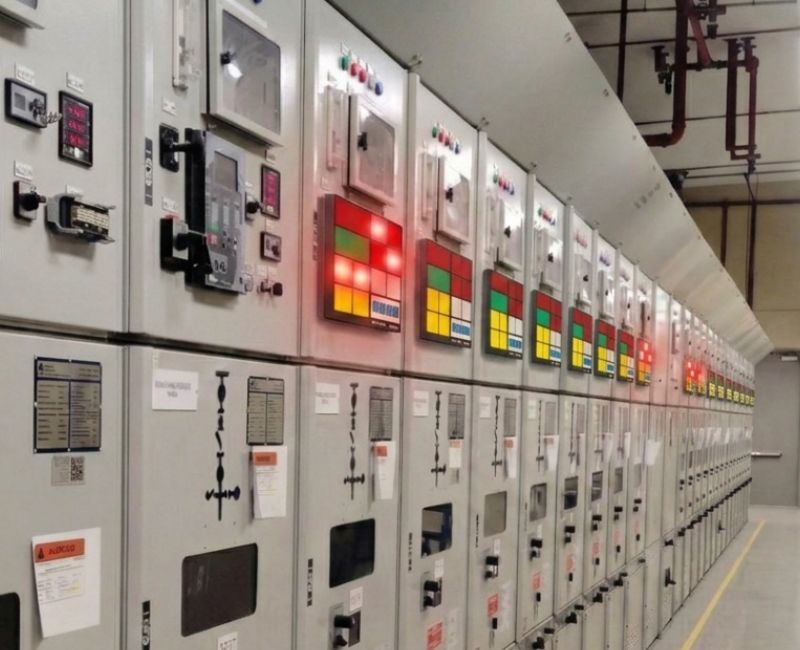
What happens when the fault appears? What happens after the operator acknowledges it? Should the alarm remain visible until the fault clears? Should there be an audible alert? How should the system behave after reset?
These details matter at site.
A clear alarm sequence helps operators understand the alarm status faster. It also reduces confusion during operation, testing and maintenance.
A visible alarm is useful only when its behaviour is clear.
Where Micro 17 Fits In
Micro 17 from Minilec supports application-based alarm annunciation for different panel requirements.
It is available from 4 to 48 windows and supports selectable sequences. Communication options such as MODBUS can also help where alarm data needs to be shared with higher-level systems.
For panel builders, this brings flexibility. They can use one annunciator range for different panel sizes and application needs, without treating every project as a completely new selection.
Micro 17 helps the annunciator adapt to the panel requirement.
Modern panels need more than components. They need clear indication, flexible configuration and better response support.
Alarm annunciation should not be treated as a small display addition. It should be planned as part of the panel’s communication logic. Because when an alarm appears, the panel should not create confusion. It should create clarity.
One alarm setup does not fit every panel.
Looking for application-based alarm annunciation for your panel?
Talk to Minilec for Micro 17 and other alarm annunciator solutions.