
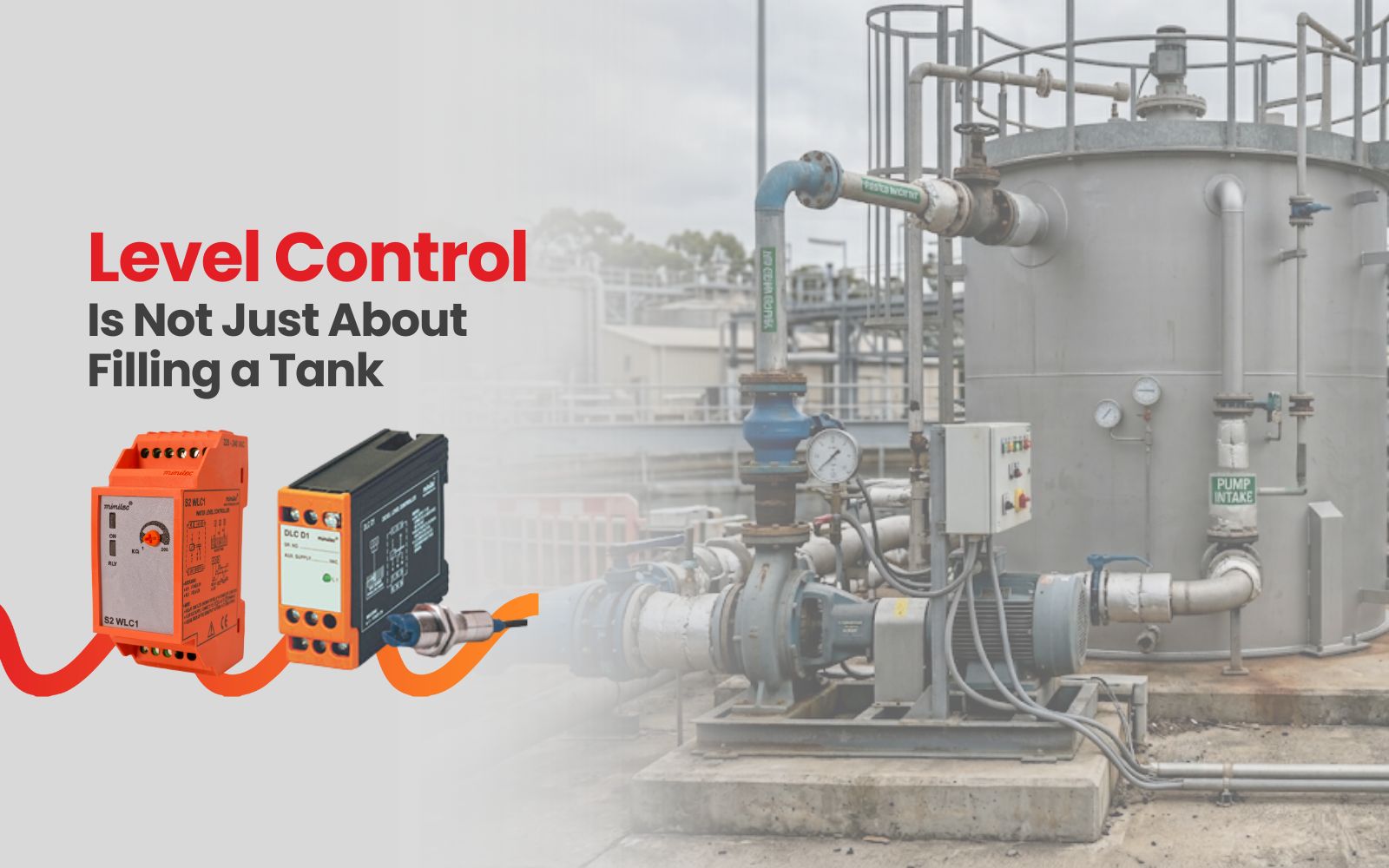
A tank looks simple from outside.
Liquid comes in. Liquid goes out. The level rises. The level falls.
But inside an industrial system, level control is not that simple. A wrong level can stop a pump. An overflowing tank can create wastage. A dry tank can damage equipment. A missed signal can bring the process to a halt.
That is why liquid level monitoring is not just about knowing whether the tank is full or empty. It is about protecting the system connected to it.
The Problem Starts Quietly
In many plants, level checking still depends on manual observation.
An operator checks the tank. Someone opens or closes a valve. A pump is started or stopped based on judgement. This may work for simple applications. But when the process becomes continuous, this manual dependency becomes a risk.
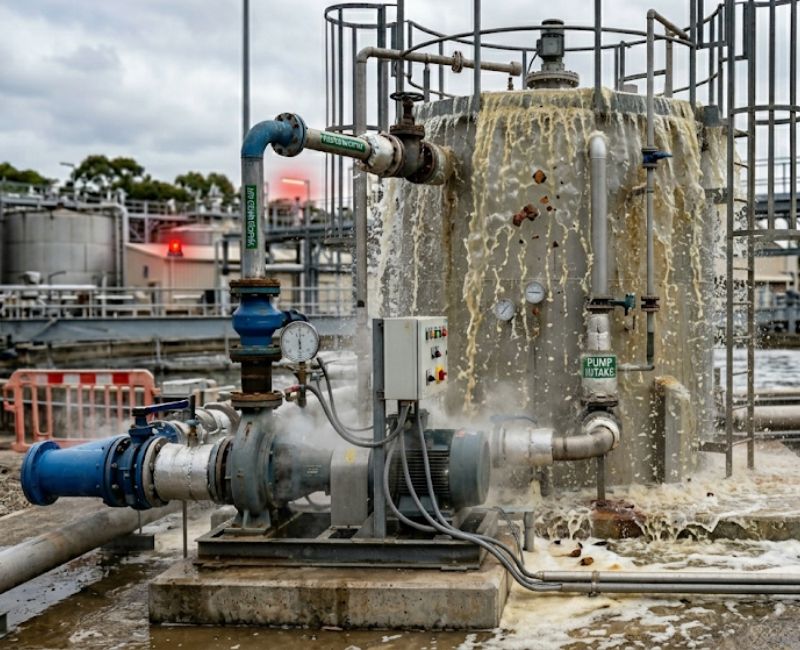
A pump may continue running when there is not enough liquid. A tank may overflow during filling. A second tank may not receive liquid at the right time. In some cases, the liquid may not even be easy to monitor with standard sensing methods.
The issue may look small in the beginning. But at site, it can become pump damage, process interruption, spillage, safety concern or repeated maintenance calls.
Different Liquids Need Different Sensing
Every liquid does not behave the same way.
Potable water is different from water with impurities. Diesel and oil are different from conductive liquids. Some liquids can be monitored through electrodes. Some need optical sensing. Some applications need one level monitoring. Some need two level monitoring. Some need one tank control. Some need two tank coordination.
This is where the right liquid level controller makes the difference.
It helps the system understand the actual level condition and acts at the right time. The action may be to start a pump, stop a pump, avoid dry run, prevent overflow, or send an indication to the control panel.
Level Control Supports Pump Protection
A pump does not fail only because of an electrical fault.
It can also fail because the liquid level is not monitored properly. Dry running is one of the common risks in pumping applications. If the pump keeps running without sufficient liquid, the damage can be serious.
A liquid level controller helps reduce this risk by giving the panel a clear level signal. This helps the pump operate only when the level condition is right.
In simple words, better level monitoring supports better pump protection.
A Small Device, A Big Site Impact
For panel builders, OEMs and maintenance teams, liquid level control is often a small part of the panel. But its role at site is important.
It reduces guesswork. It improves automation. It helps manage tanks more reliably. It supports water, oil, diesel and other liquid-level applications. It also helps avoid repeated site complaints caused by overflow, dry run or wrong level response.
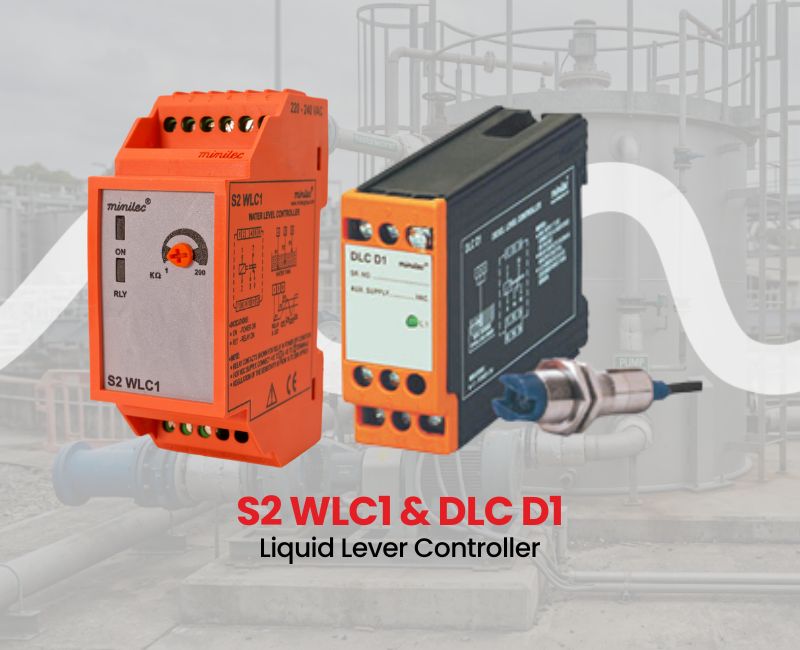
When selected correctly, a liquid level controller becomes a practical protection and control device.
A tank is not just a storage point. It is part of a larger system.
If the level is wrong, the pump, panel, process and operator response can all be affected. So, level control should not be treated as a small add-on.
It is a simple way to make pumping and utility systems safer, smarter and more reliable.
Level control is not about filling a tank. It is about protecting what depends on it.
Looking for reliable liquid level monitoring for your application?
Talk to Minilec for application-based level control solutions.