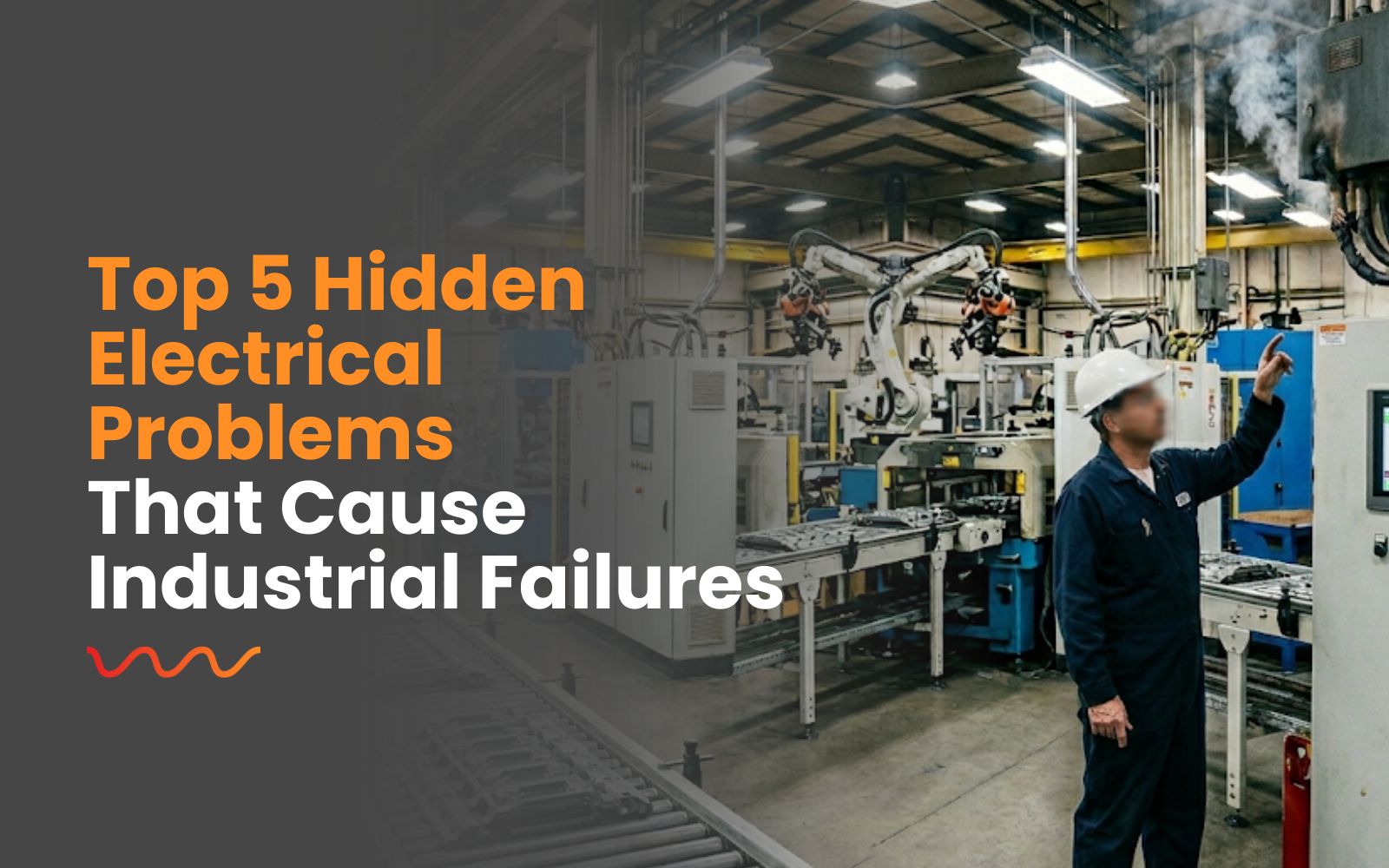
Everything was running normally. The machines were operational. Production was on schedule. No alarms were visible on the panel. And then suddenly – the line stopped.
Maintenance teams rushed in. Operators checked the machines. Discussions started around motor failure, production loss, and restart time. But the actual problem had not started that day. It had been building silently for weeks.
This is the reality of most industrial electrical failures. They rarely happen instantly. In most cases, the warning signs already existed, hidden behind daily operations, unnoticed until downtime finally made them impossible to ignore.
In industrial systems, even small electrical abnormalities can slowly create stress across equipment, panels, motors, and control systems. And when these conditions remain undetected, the result is often unexpected shutdowns, damaged equipment, and costly downtime.
Here are five hidden electrical problems industries often overlook and why identifying them early is critical for reliable operation.
1. Loose Electrical Connections
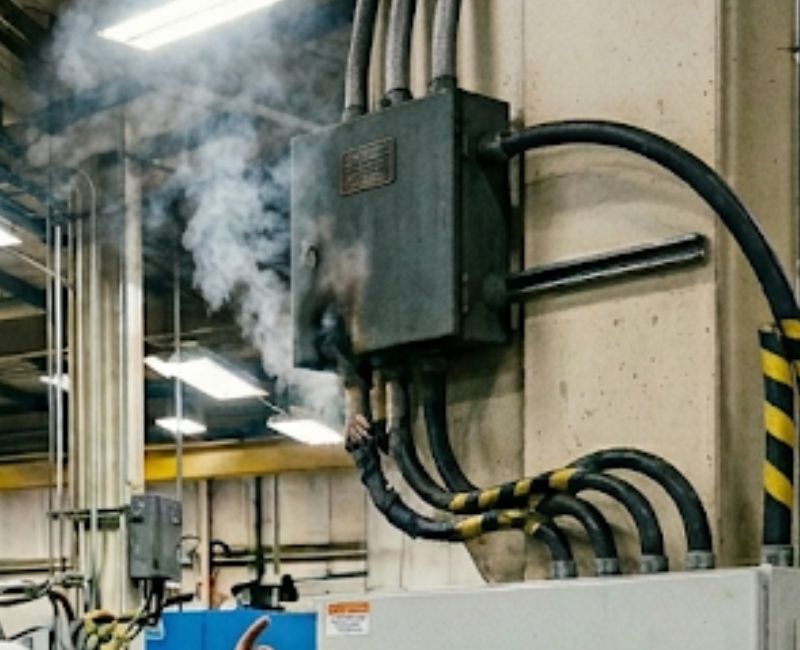
Then one day:
- the relay trips,
- the panel overheats,
- or the machine suddenly stops
What looked like a minor connection issue slowly became a major operational problem.
2. Voltage Imbalance
Three-phase systems depend heavily on balanced voltage conditions. But in many industries, voltage imbalance develops quietly in the background without immediate visible symptoms.
At first, the motor still runs. Production continues. Operators may not notice anything unusual. But internally, the motor begins operating under stress. Current increases. Heat rises. Efficiency drops and because the problem develops gradually, the equipment keeps degrading silently until reliability starts falling. Many industries focus only on whether the machine is running.
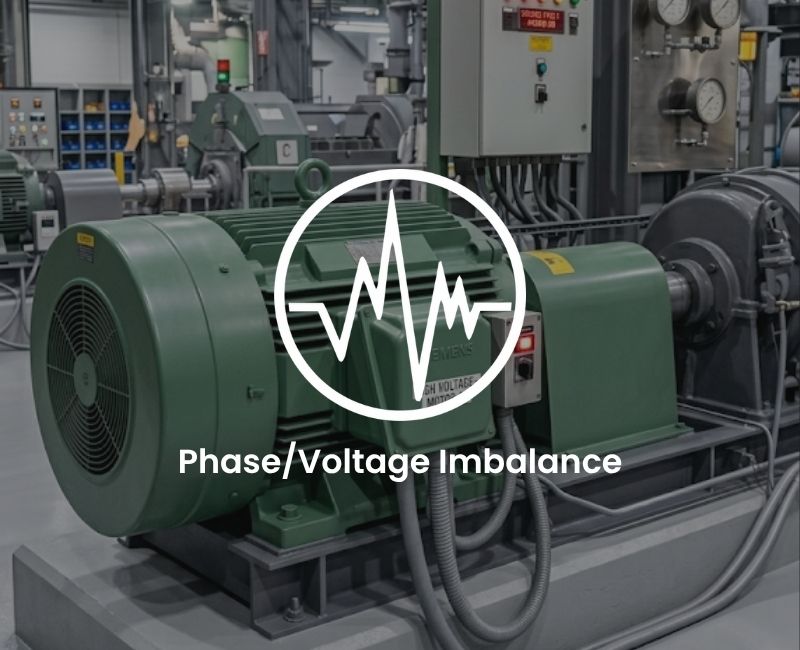
But the more important question is: Is it running under healthy electrical conditions?
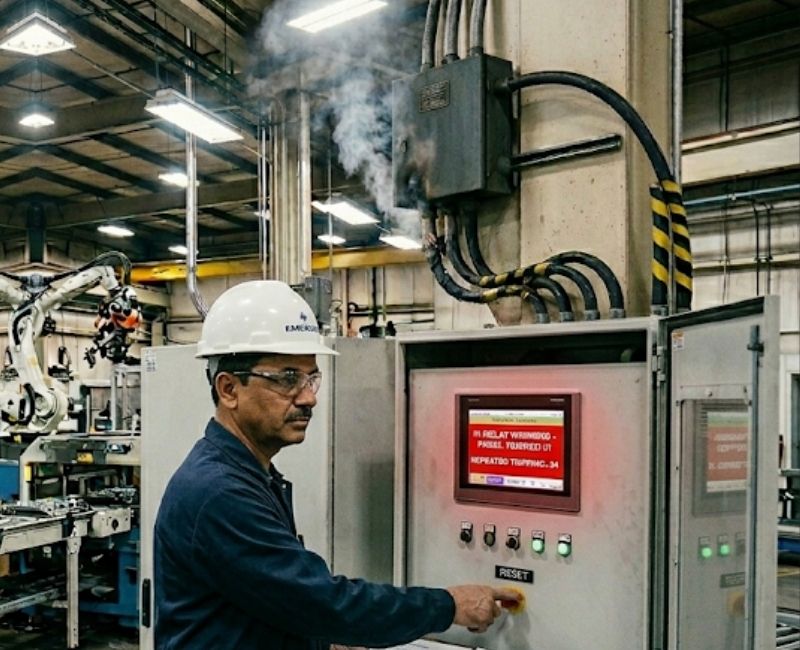
3. Repeated Tripping
One trip may not seem serious. The system stops. Someone resets it. Operations resume. Then it trips again. And again.
Repeated tripping is often treated as an inconvenience instead of a warning sign. But protection systems are designed to trip for a reason.
They respond to:
- overload conditions,
- imbalance,
- abnormal voltage,
- or unsafe operating conditions.
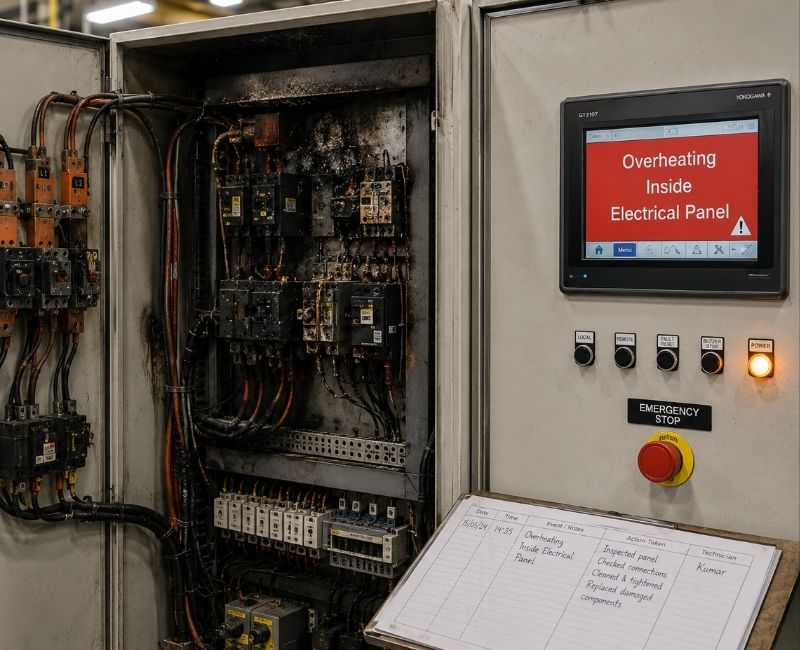
4. Overheating Inside Electrical Panels
Not every overheating problem is dramatic. Sometimes, it’s simply poor ventilation. Dust accumulation. Overloaded circuits. Aging components. Weak airflow inside the panel.
The system may continue operating while internal temperatures keep increasing slowly every day and that is what makes overheating dangerous, because by the time visible symptoms appear externally, components inside the panel may already be under severe stress.
5. Lack of Electrical Monitoring
This is perhaps the most overlooked issue of all. Many industries still operate reactively. Systems are checked only after something fails. But electrical systems continuously provide warning signs like Abnormal Voltage, Overheating, Imbalance, Overload Conditions, Unstable Current Patterns, long before downtime occurs.
Without proper monitoring and protection systems, these warning signs remain invisible and when visibility is missing, small electrical issues continue growing silently in the background. Until operations stop unexpectedly.
Why Early Detection Changes Everything
Most industrial failures do not begin with a catastrophic event. They begin with small electrical abnormalities that slowly create stress over time.
The difference between smooth operation and unexpected downtime often comes down to one thing: How early the issue was detected.
This is why protection, monitoring, and control systems play such a critical role in industrial reliability today, because electrical systems rarely fail without warning.